
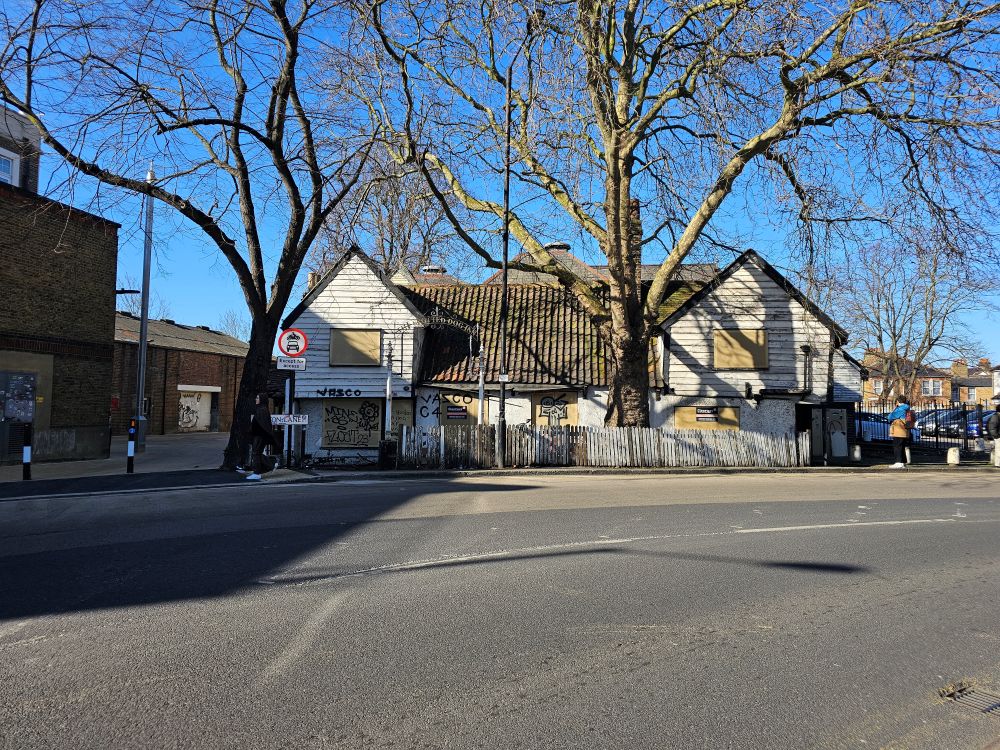
• Historic Old Spotted Dog pub gets planning permission for restoration
• Plans to turn return the 15th Century hostelry to former glory
The Spotted Dog Inn, Newham’s oldest secular building, is set for a major renovation after Council planners gave it the go-ahead this month.
The former hunting lodge in Forest Gate – thought to have once been a haunt of King Henry VIII – will see a complete restoration, including a new hotel and flats.
Real estate company Highpride Properties has been granted permission to renovate the Grade 2-listed building.
It will also build two blocks of 22 flats (including 2x four bedroom, and 3x three bedroomed) and an apartment hotel next to the pub in Upton Lane.
The plan includes the removal of 20th-century additions to the building to reveal and restore the original Tudor, Georgian/Early Victorian, and Late Victorian/Edwardian elements of the building.
This will involve the reinstatement of windows and brickwork using materials and detailing to match the historic fabric.
The pub’s fascinating history includes it being featured in Daniel Defoe’s fictionalised retelling of the pestilence in London A Journal of the Plague Year. In his account the pub was used as a refuge for people fleeing the disease running rife in the capital in 1665 and again the following year following the Great Fire.
The site is next to The Old Spotted Dog Ground, which is home to the oldest senior football ground in London, continuously in use since 1880.
Since 2020, the ground has been owned and operated by Clapton Community FC, which consistently attracts over 500 attendees per game.
Due to the cost of the renovation, the developers have calculated that it is unviable to include an element of social housing in the proposed plans, however there is commitment to making 35 per cent of the construction jobs on the project, and 50 per cent of jobs in the new pub and hotel to Newham residents.
Explaining why it has a Grade-II listing Historic England say: “[It is] a well-surviving, if simply constructed, late-C15 or early-C16 house comprising central hall and flanking two-storey cross wings, these with weatherboarded jetties; interesting interior including exposed timbers, hearth with bressummer, other fireplaces and historic joinery including a Victorian bar and back bar; particular poignancy as a rare-surviving late-medieval building in this area, evoking the rural character that could be enjoyed here until the middle of the C19, when this part of old Essex was lost to the expanding capital.”
